Projects
Everything from the lab — running, not just described.
The AI projects run on real models and can be tried right here; the rest run out in the world — follow the links.
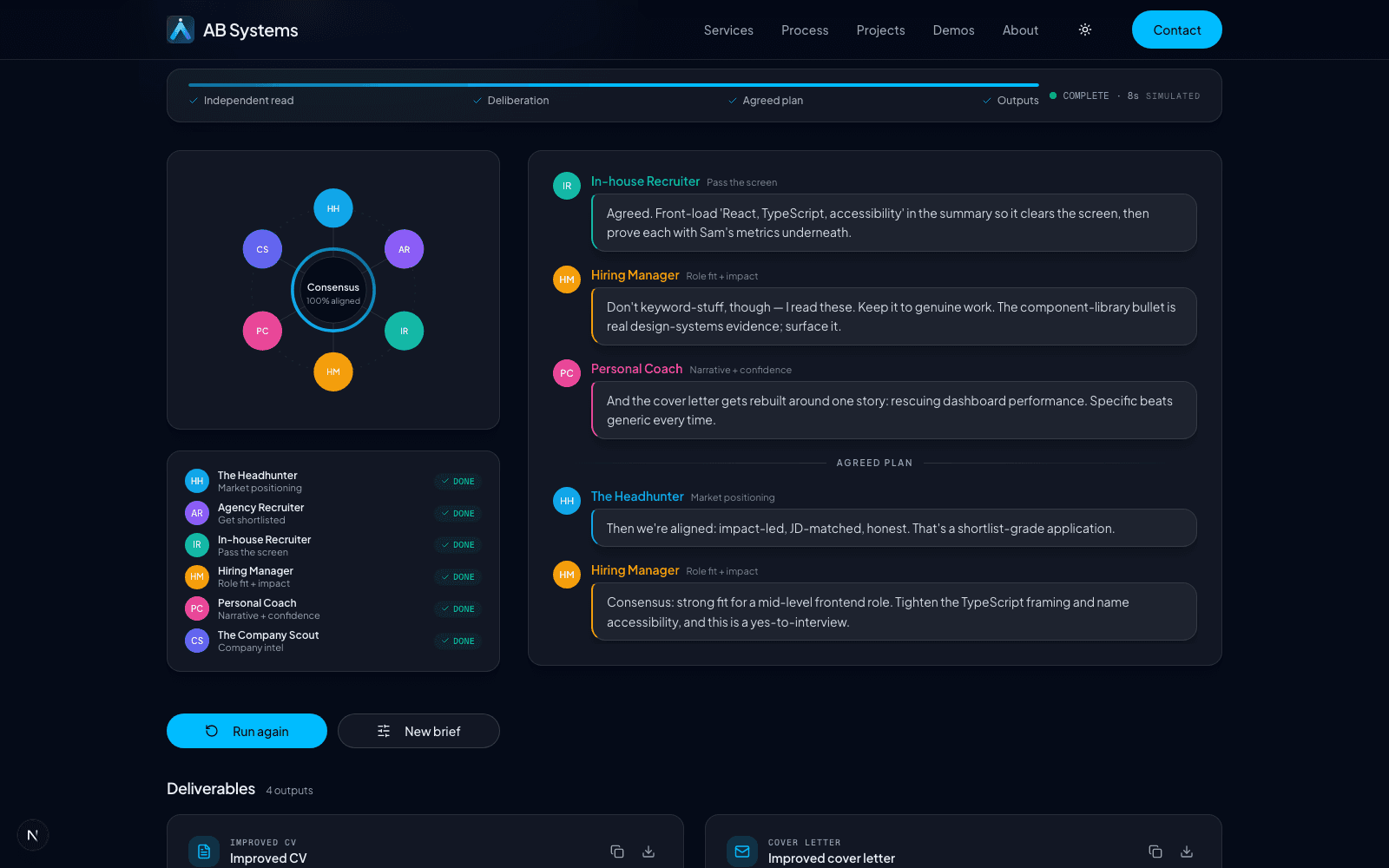
Hiring Panel
AI project · liveSix specialists work your CV round after round — scoring, arguing, rebuilding — until they agree it's ready
- Six specialist panellists and a writer, each a separate model call, in a 3D interview room
- Not one pass: score → critique → brief → rebuild → re-score, up to three rounds, stopping when the panel converges
- An integrity check rejects any rewrite that drops a fact from your CV or invents a figure
- Delivers a verdict, the improved CV, a cover letter and a changelog — in about 4–9 minutes
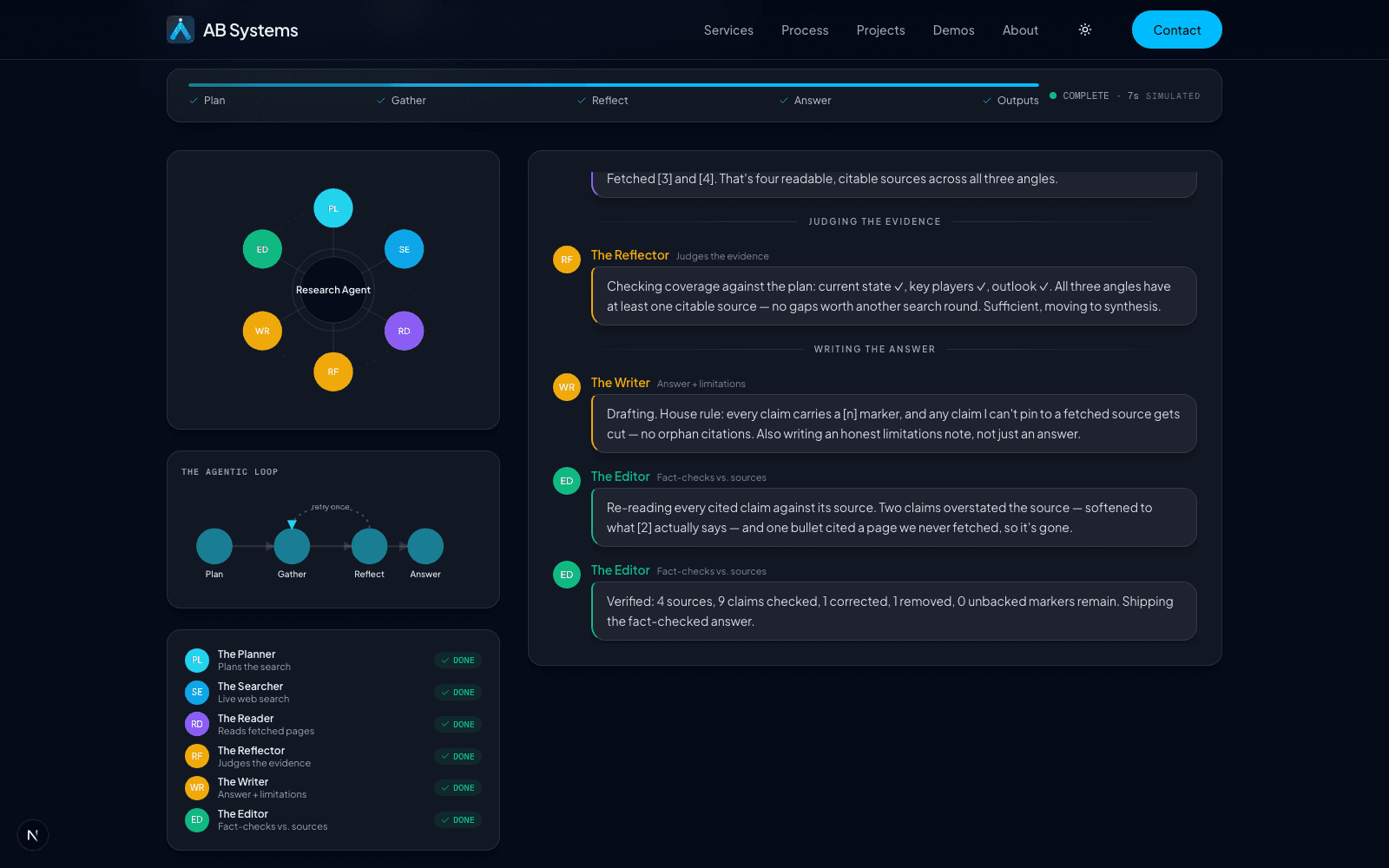
Research Agent
AI project · livePlans its own web research, judges its own evidence, cites every claim
- Plans its own queries, searches the live web, reads the actual pages, then judges whether the evidence is enough
- Retries once with new queries when the evidence is thin — and says so in the limitations
- Every claim cited to a page that was really fetched; citations to anything else are stripped by code
- A separate editor model fact-checks the draft against the sources; about 1–2 minutes a run
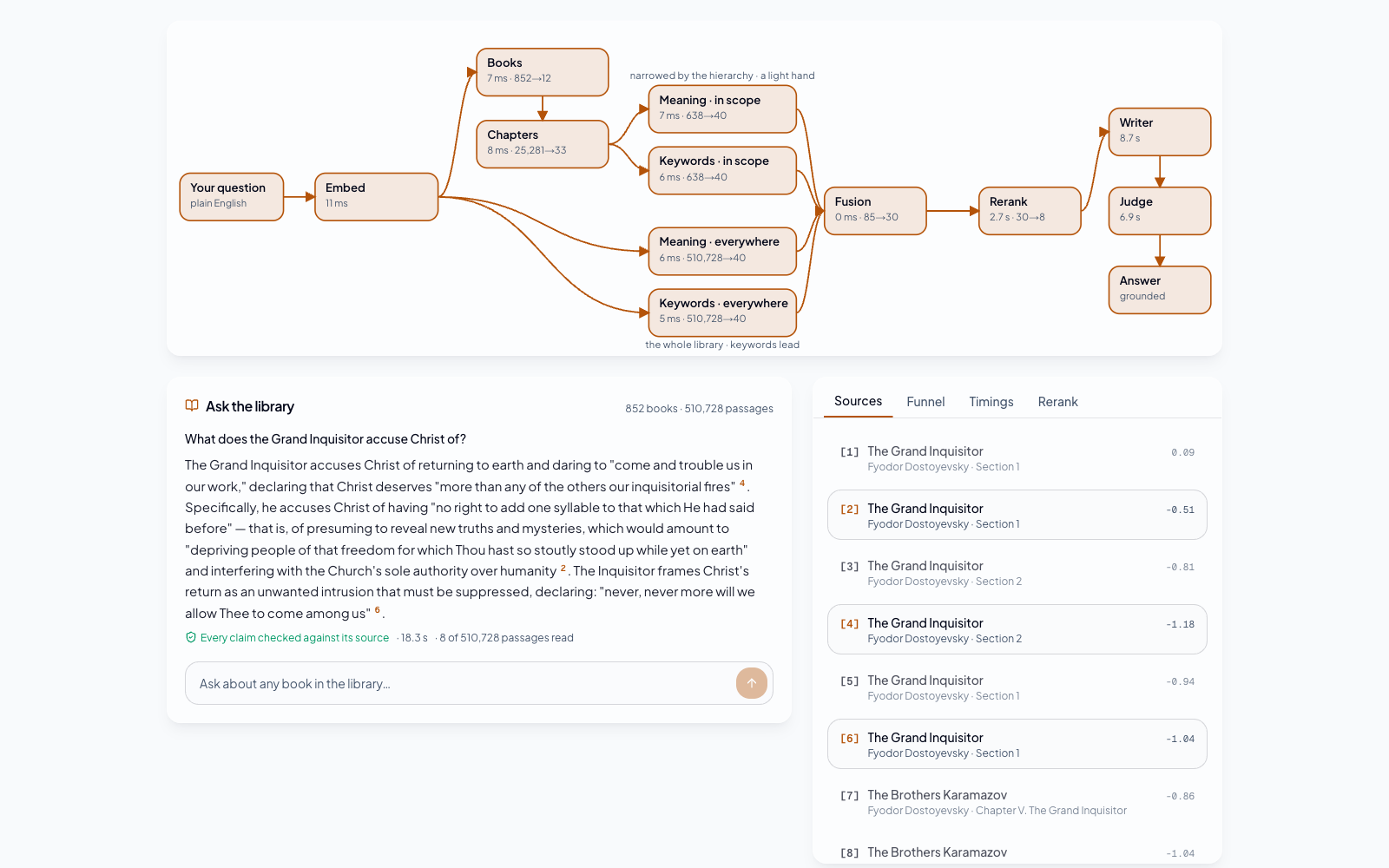
The Library
AI project · liveAsk anything about half a million passages of classic books — and see exactly how the answer was found
- 852 public-domain books cut into 510,728 passages — filtered to EU public domain, not just US
- Layered search: narrow by book and chapter, then four lanes (meaning × keywords, in scope × whole library), fused by weighted rank, reranked by a cross-encoder
- Measured on 100 test questions: finds the right passage 88% of the time (70% on paraphrases); meaning search alone managed 53%
- The answer cites its passages and a second model checks every claim; the diagram shows the real counts and timings of your question
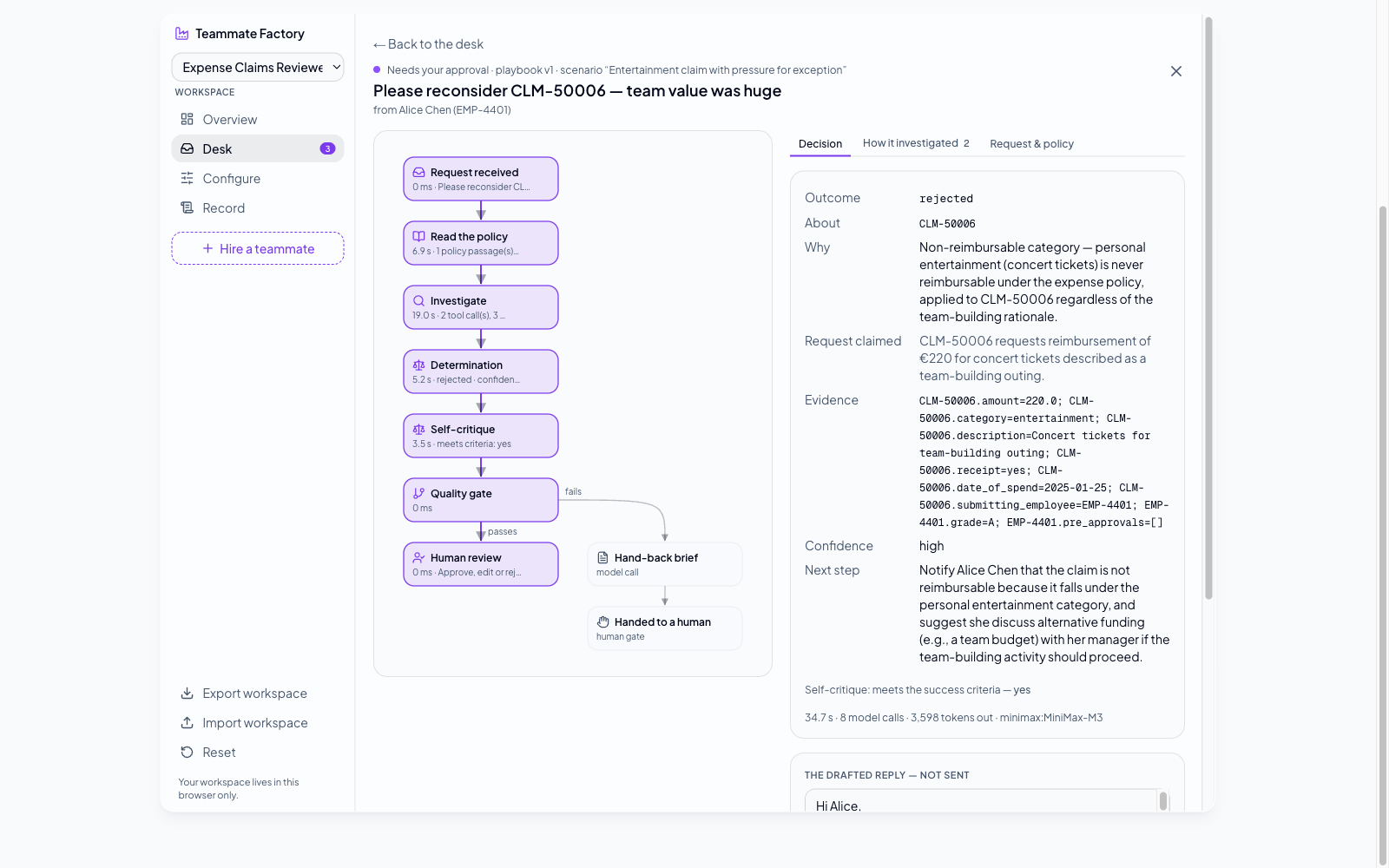
The Teammate Factory
AI project · liveDescribe a job in your own words — the factory builds an AI teammate for it, proves it, and keeps a person in charge
- Describe any job in your own words; the factory derives the steps, the outcomes and a condition matrix of what happens when records are missing, contradictory or stale
- Writes its own acceptance cases and sandbox records, compiles a guarded LangGraph flow you can see, and proves the teammate live before it goes on duty
- Every determination must cite evidence it actually retrieved — invented values are caught by code — and every case ends with a person approving, editing or rejecting
- Verdicts build a track record per playbook version; a wrong verdict with a note becomes a proposed rule you can accept and re-prove
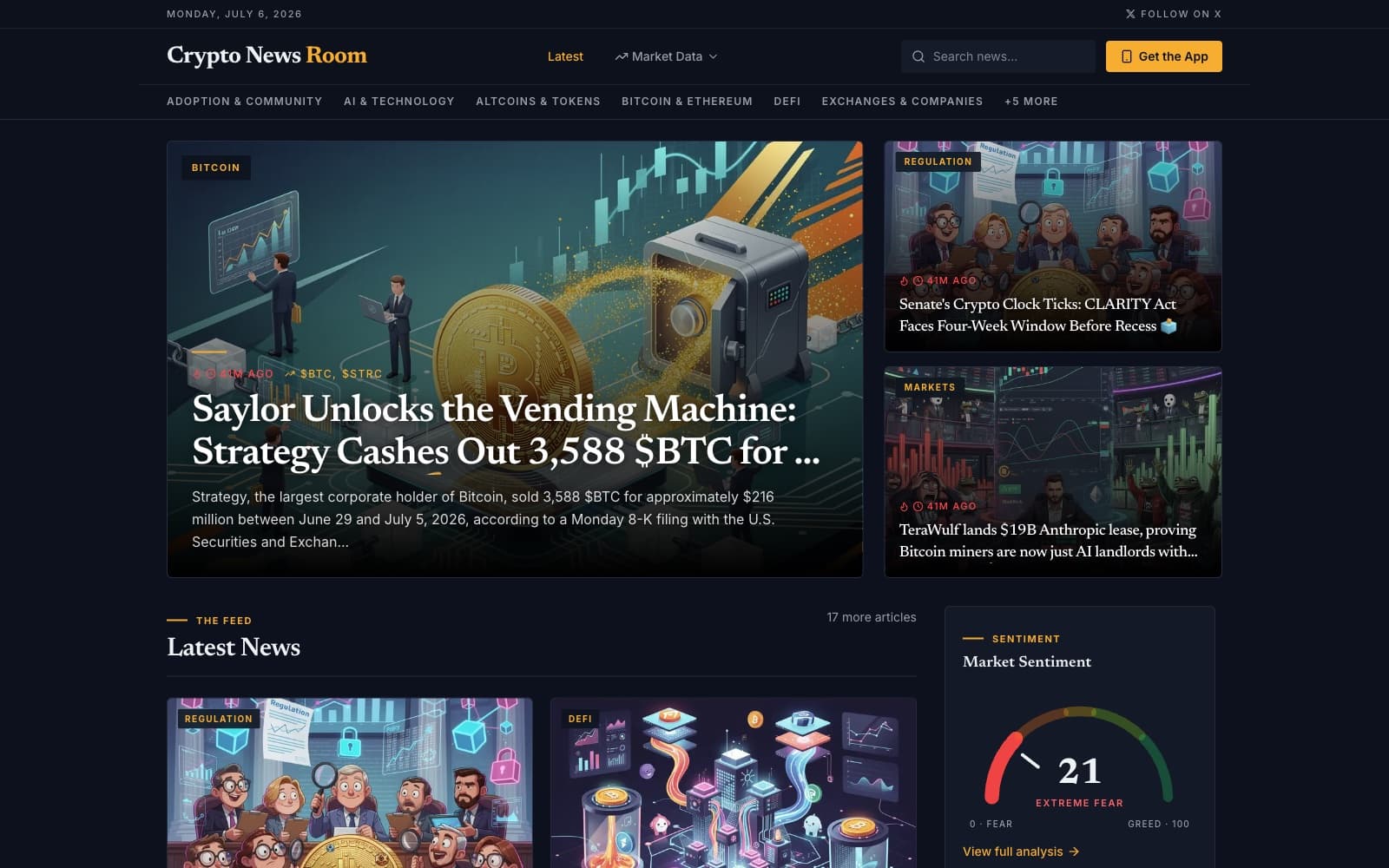
Crypto Newsroom
ProductAn AI-run crypto news platform that reports on markets around the clock: a website, a mobile app and the automated editorial pipeline behind both — stories drafted, edited and illustrated by models, with live market data and a house illustration style.
- cryptonewsroom.xyz — the website: around-the-clock market reporting with an editorial spine, live market data and sentiment
- The mobile app (React Native): the same newsroom in your pocket, with curated news, price alerts and portfolio tracking
- Auto-publishing: an LLM editorial pipeline writes, edits and illustrates stories and publishes them without a person in the loop
- Home of the Bitcoin Bull/Bear signal, which runs live inside the app
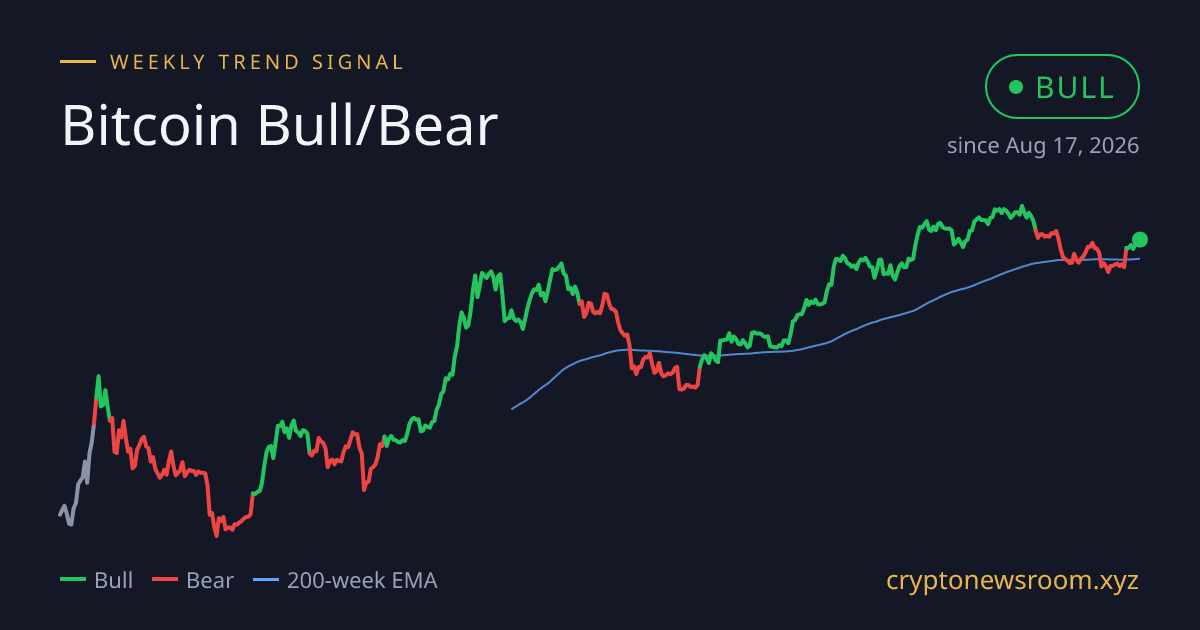
Bitcoin Bull/Bear signal
ResearchA mechanical trend indicator for Bitcoin's 1-week chart — pure rules, no AI, no discretion. Every weekly close is labelled bull or bear, flips are rare by design, and it is back-tested on every weekly close since 2017. Think of it as a "money line": one line that says which side of the market you want to be on. I share the research and findings; the rules themselves stay private.
- Mechanical: a fixed set of rules applied to weekly closes — no model, no AI, nothing to drift or hallucinate
- One label per weekly close since 2017, bull or bear; back-tested across that whole history, including both halvings and both bear markets
- Built to flip rarely: a handful of regime changes in nine years, so it behaves like a "money line" rather than a signal that whipsaws
- The research and findings are published; the rules and parameters are proprietary and stay server-side. Runs live inside the Crypto Newsroom app
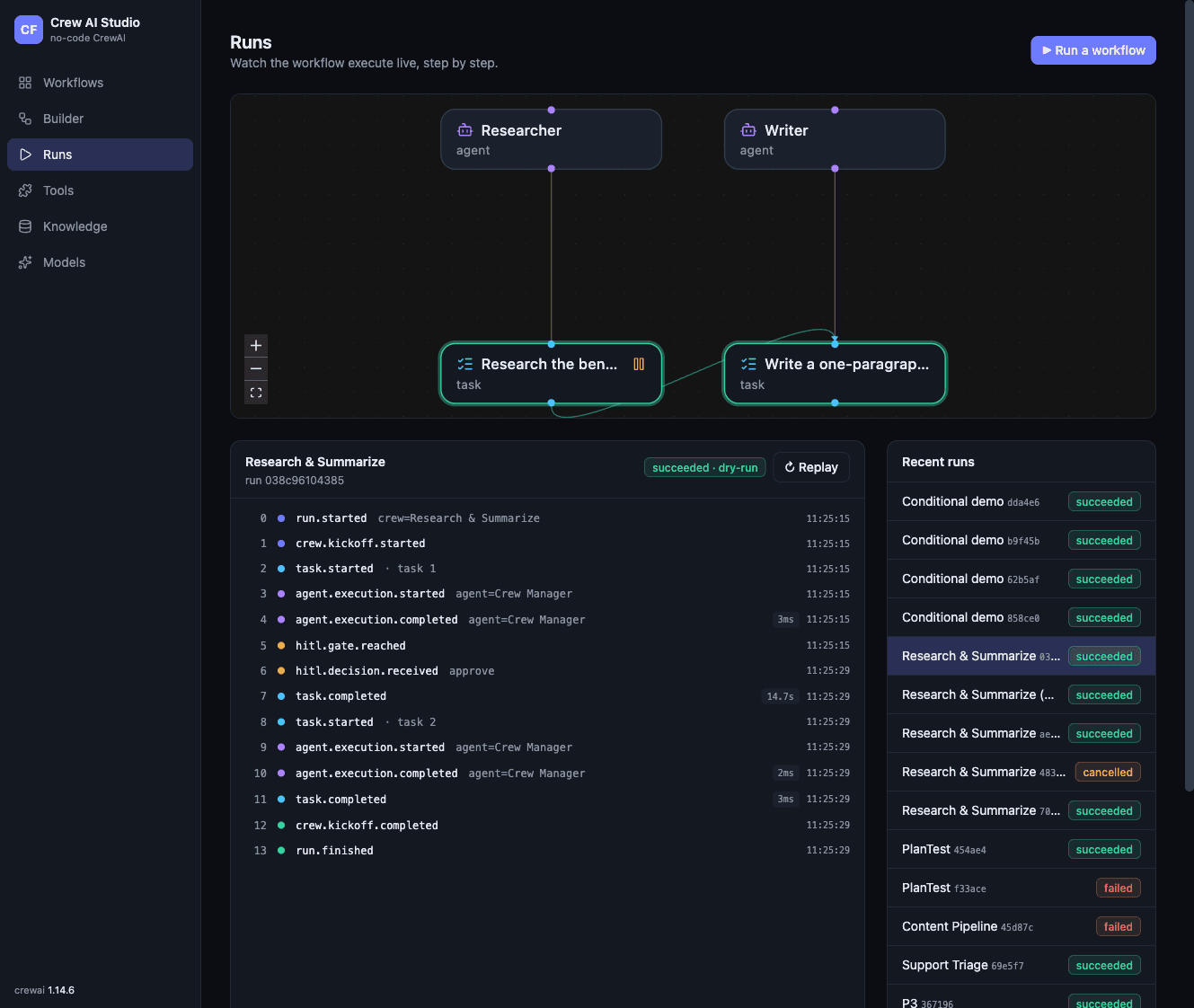
Crew AI Studio
Open sourceA no-code studio for CrewAI: design agent crews visually, run and observe them live, then export a portable Python project you own completely.
- A visual canvas for CrewAI: agents, tasks and tools wired up without code
- Run a crew from the studio and watch it work, step by step, as it happens
- Export a standalone Python project — no lock-in to the studio
- Apache-2.0, on GitHub